
Water Backup vs. Flood Insurance: What Illinois and Indiana Property Owners Should Check
A practical guide to telling sewer or sump-pump backup from flooding, checking basement limits, and reviewing protection for homes, rentals, condos, and businesses.
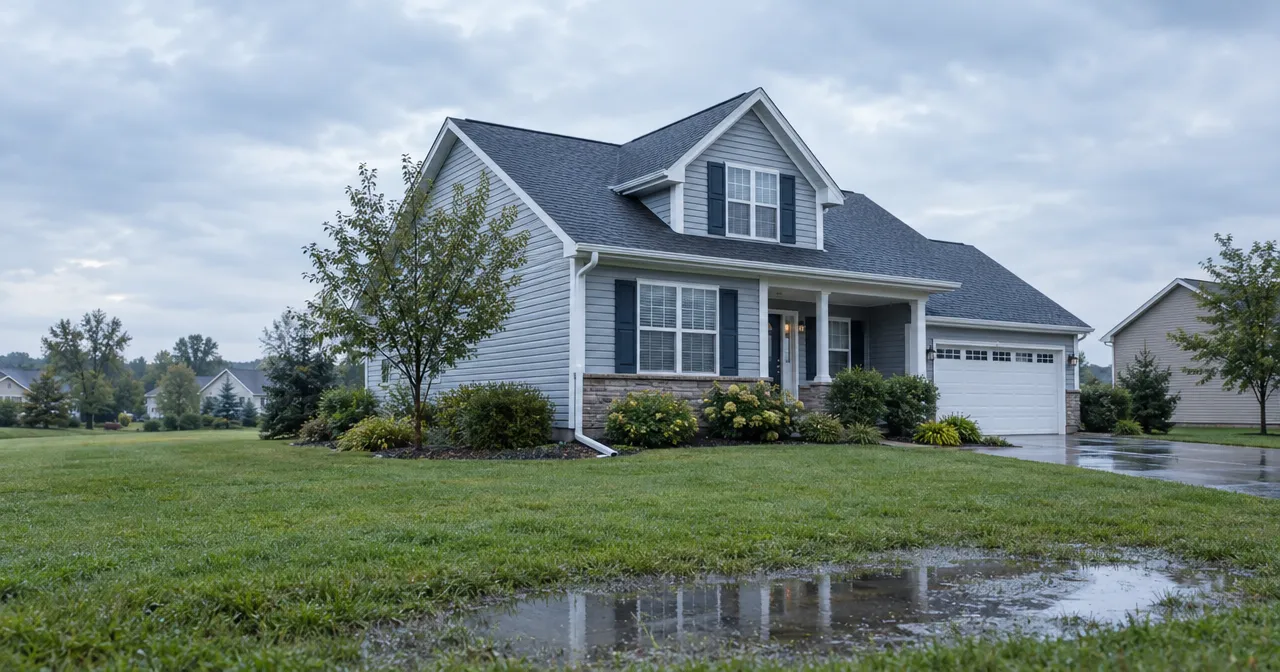
A few inches of water in a basement can come from very different places. A drain may reverse during a heavy storm. A sump pump may stop working when the power goes out. Or runoff may move across the yard and enter through a basement window. The cleanup can look similar, but the insurance questions are not.
For households and property owners across Illinois and Indiana—from Norris City to Evansville and beyond—the useful question is not simply, “Am I covered for water?” It is where the water came from, how it entered, and which policy applies. A homeowners policy, a water-backup endorsement, and a flood policy address different causes of loss. None should be treated as a substitute for the others.
This guide walks through the distinctions and gives you a practical way to review your coverage before the next storm.
Start with the water’s path, not the weather report
Rain may be involved in all three of these examples, but the source of damage matters more than whether it happened on a rainy day:
- Water from inside the home: A supply pipe suddenly bursts or an appliance hose unexpectedly breaks and sends water across the floor. A homeowners, condo, renters, or property policy may respond to sudden and accidental discharge, subject to its terms. Ongoing leaks, maintenance problems, and the cost to repair the failed pipe or appliance itself can be treated differently.
- Water backing up through a drain or sump system: A floor drain reverses, a sewer line backs up, or a sump pump overflows or fails and water enters the basement. This is the situation to discuss when asking about a water-backup or sewer/sump-pump endorsement. Do not assume the standard policy includes it.
- Water arriving from outside at ground level: A river overflows, or rapid rain runoff spreads over normally dry land and flows through a door or window. That calls for a flood insurance discussion rather than an assumption that a standard property policy or water-backup endorsement will pay.
The Illinois Department of Insurance’s homeowners and renters definitions list sewer backup and sump-pump failure among common exclusions and describe optional sewer-backup/sump-overflow protection; they also distinguish flood insurance from ordinary home insurance. The actual contract, endorsements, and facts of a loss control any particular claim.
Four basement scenarios, four useful questions
A drain pushes water onto the laundry-room floor. Ask whether the policy has water-backup coverage, whether this type of drain is included, and what the endorsement will pay for cleanup, damaged finishes, and belongings. If there is an outside flood at the same time, the cause may need closer investigation; do not guess from the appearance of the water.
The sump pump quits in a downpour. Ask if the endorsement covers pump failure and overflow, whether a power outage changes the answer, and whether any backup system or maintenance condition applies. Keeping a backup battery or generator may help reduce damage, but equipment is not a replacement for reviewing coverage.
Runoff flows across the yard and through a basement window. Ask about a separate flood policy. A water-backup endorsement is not a general-purpose policy for rainwater that enters from the surface. FEMA’s explanation of what counts as a flood describes a general, temporary inundation affecting at least two acres of normally dry land or at least two properties, including the insured property, from specified causes such as overflowing inland waters or unusually rapid surface-water runoff. A small, isolated puddle does not automatically meet that definition.
Water appears slowly along a foundation wall. Ask specifically how the policy treats seepage, groundwater, and gradual intrusion. Do not assume that buying a backup endorsement fixes this gap: the Illinois department’s description expressly says water seepage is not covered by the sewer-backup/sump-overflow coverage it describes. A contractor can help identify drainage or foundation problems; an agent can help explain the insurance wording.
What to check in a water-backup endorsement
An endorsement changes the property policy; it does not rewrite every exclusion in it. When you review a quote or declarations page, find the endorsement itself and ask these questions:
- Which events are named? Look for sewer or drain backup, sump-pump overflow or failure, and any differences among those terms. Have the agent explain the wording that applies to your address.
- What is the limit? The backup limit may be a separate amount, smaller than the dwelling or personal-property limit. Compare it with the cost of drying, removing damaged materials, repairing finished space, and replacing items stored low to the floor.
- What deductible applies? Ask whether the backup loss uses the standard property deductible or a different one. A limit and deductible together give a more realistic picture of what you might pay yourself.
- Which expenses count? Confirm the treatment of cleanup, flooring and drywall, appliances, personal belongings, mold-related work, and a temporary place to stay if the home cannot be used. Some expenses may be excluded or subject to conditions or sublimits.
- Are there conditions or exclusions? Ask about maintenance, repeated losses, the sewer line itself, outside surface water, and groundwater seepage. Damage from water and the cost to fix the source are not always the same insurance question.
For example, a finished family room, storage boxes, and a furnace in a lower level create a different exposure from an unfinished basement with a concrete floor. The right limit depends on what is there, not just the size of the house. Photograph the space and keep an updated list of contents so you can discuss a realistic amount.
Why a flood policy is a separate decision
Standard homeowners and renters policies generally do not insure flood damage. The Illinois Department of Insurance’s home-insurance shopping guide specifically distinguishes typical plumbing or roof-leak damage from flooding caused by ground water, runoff, and snowmelt. A lender’s flood requirement is one reason to buy coverage, but it is not the only reason to consider it: being outside a high-risk mapped area does not mean water cannot reach a property.
The National Flood Insurance Program (NFIP) offers policies for eligible homeowners, renters, condo owners, and businesses in participating communities. Building and contents coverage are separate choices; buying protection for a structure does not by itself mean every item inside is insured. The program’s guide to buying a flood policy explains coverage categories, separate building and contents deductibles, and key exclusions. Private flood policies may use different terms, so compare the actual policy rather than assuming the NFIP rules apply to every quote.
A finished basement deserves special attention. The NFIP places significant limits on property kept in a basement and does not generally cover personal belongings stored there. Certain essential equipment may be treated differently under building coverage. Do not assume the flood policy will replace a basement’s furniture, finished walls, or temporary housing costs. Ask for an item-by-item explanation for the lowest level of your building.
Plan for the effective date. NFIP flood coverage generally begins 30 days after purchase, with specific exceptions, including certain mortgage transactions. If a major storm is already in the forecast, a newly purchased policy may not help with that event. Confirm the start date in writing and ask separately about any private-policy waiting period.
The overlap that can surprise homeowners
A backup during a widespread flood is not necessarily the same as a backup caused by a clogged private sewer line. FEMA’s flood-policy guidance uses those contrasting examples: a sewer backing up during a qualifying flood may be considered under flood coverage, while a backup caused by clogged pipes is not covered by that flood policy. Claim decisions depend on the exact cause and policy wording. If floodwater, sewage, and sump discharge are all present, document what happened and report the facts to your insurer or insurers rather than deciding in advance which policy must pay.
Likewise, a storm-damaged roof and rising water on the first floor are separate issues. Wind damage that lets rain enter through a newly opened roof can fall under a homeowners policy, subject to wind or hail terms and the evidence of damage; water entering from a flooded street calls for a flood-policy review. Wind and hail deductibles, roof settlement rules, and flood deductibles can differ. One storm does not mean one deductible or one answer for every part of the loss.
Check the right policy for your property or operation
Homeowners: Review the home policy, any backup endorsement, and flood options together. If you finish a basement, add a bathroom, replace a furnace, or start storing valuable belongings downstairs, revisit the backup limit. Replacement-cost and actual-cash-value provisions for damaged property also affect the amount available after a covered loss.
Renters: Your landlord’s insurance is not a substitute for coverage on your furniture and other possessions. Ask whether your renters policy offers backup protection for your belongings, and consider contents-only flood coverage where appropriate. If you live in a garden-level apartment, ask especially about belongings close to the floor and any flood-policy basement restrictions.
Condo owners: Ask what the association’s master policy covers and where your unit policy begins. The association may insure shared parts of the building, while you may be responsible for improvements, finishes, and belongings. Ask whether water from a common drain, a neighbor’s unit, or outside flooding is handled differently. Review any possible loss-assessment exposure instead of assuming the master policy covers every bill passed to owners.
Landlords: An owner-occupied homeowners policy may not fit a property you rent out. Review the dwelling or landlord policy for building repairs, any applicable backup coverage, liability, and loss of rental income after a covered event. The tenant should consider their own contents coverage. If you own several properties, evaluate the drainage and lowest-floor exposure at each address separately.
Business owners: A business owners policy or commercial property policy may cover certain sudden internal water losses, but surface flooding and sewer backup deserve their own review. Think beyond the walls: inventory on a low shelf, electrical equipment, customer records, and a tenant build-out can all be affected. Ask whether the applicable endorsement covers these items and whether business-income protection responds to that covered cause of loss. The NFIP’s flood policy does not pay for business-interruption losses, so ask about that gap explicitly. Commercial vehicles, professional liability, and employee coverage address other exposures; they do not automatically fill a water-damage gap.
A focused review before the next heavy rain
Bring your declarations pages, endorsements, and a few photos of the lowest level to your next policy review. Then work through this short checklist:
- Trace the likely entry points: drains, sump pit, basement windows and doors, foundation walls, and nearby low spots. Note whether a creek, drainage ditch, or paved slope could send water toward the building.
- List what could be damaged: finishes, mechanical equipment, stock, furnishings, tools, and anything stored near the floor. A simple room-by-room inventory is more useful than a guess made after cleanup begins.
- Locate the actual backup endorsement and write down its limit, deductible, and exclusions. If it is absent, ask for a quote and an explanation of what adding it would and would not change.
- Compare a separate flood quote for building coverage and contents coverage as applicable. Check the effective date, basement restrictions, and deductibles. If there is a condo association or landlord involved, find out who insures which property.
- Ask how damage is settled: replacement cost or actual cash value? The difference can matter for older flooring, furnishings, or equipment. Also ask whether cleanup and temporary housing or business-income expenses are included for the particular covered cause.
- Revisit the answers after renovations, a change of tenant, a new business use, or a significant change in what you store downstairs. An annual review is useful, but a material change is a good reason not to wait until renewal.
If water is already entering, put safety first: stay away from standing water around electrical equipment, take reasonable steps to stop further damage when safe, document the source and damage with photos, and promptly notify the insurer. Keep receipts for emergency work and ask the claims representative what to retain before discarding damaged materials. The purpose of documentation is to give the insurer a clear account—not to guarantee coverage before the cause is established.
Water-backup and flood protection work best when each is chosen for the exposure it actually addresses. If you would like help comparing your existing home, condo, renters, landlord, or business policy with your property’s water risks, contact The Haley Agency for a personalized policy review or quote. We serve clients across Illinois and Indiana, including Norris City, Evansville, and surrounding communities, and can help you protect what you have built with coverage that fits your home and broader auto, life, or business needs.