
Illinois Homeowners Insurance: Rates, Companies, and Local Coverage Choices
For most families and property owners, a home is far more than just a place to live. It is a sanctuary, a gathering place, and often the cornerstone of your long-term financial foundation. Protecting that investment is critical, but securing the right protection has become increasingly challenging in recent years.
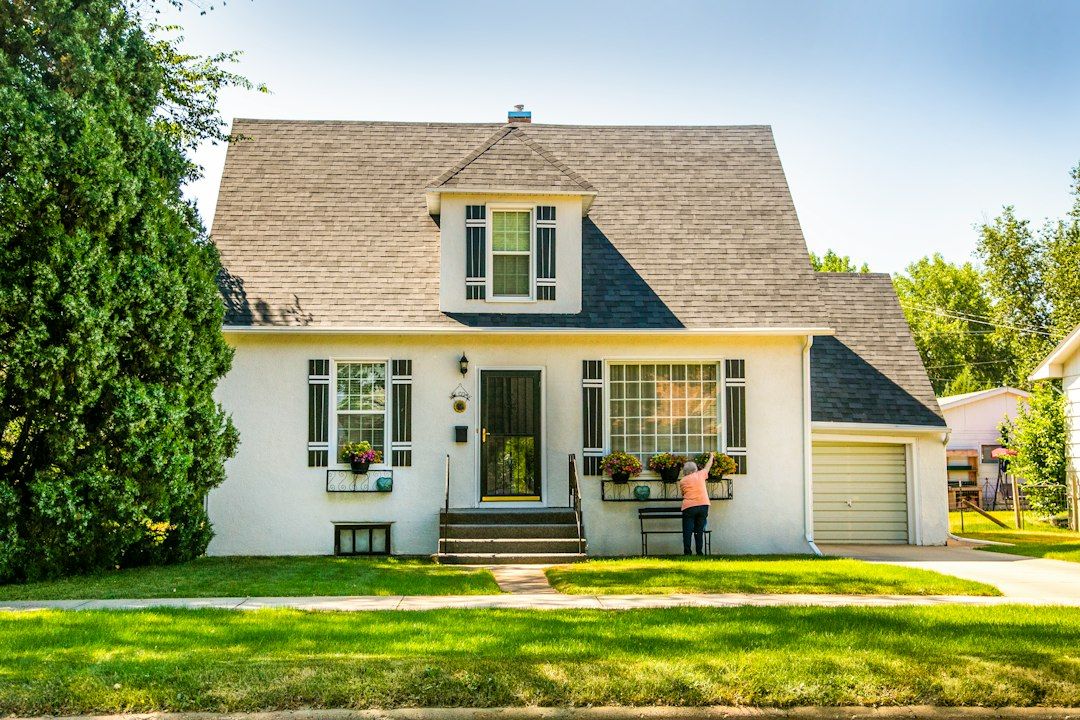
For most families and property owners, a home is far more than just a place to live. It is a sanctuary, a gathering place, and often the cornerstone of your long-term financial foundation. Protecting that investment is critical, but securing the right protection has become increasingly challenging in recent years. If you have opened a policy renewal notice lately, you have likely experienced a bit of sticker shock. Across the state, residents are facing unexpected premium spikes, leaving many frustrated and confused about how to manage their household budgets.
At The Haley Agency, our philosophy is rooted in trust, transparency, and education. We believe that you deserve to understand exactly where your premium dollars are going and how your policy works in the real world. Navigating the modern insurance marketplace requires more than just picking a familiar brand name. It requires a practical, hands-on approach to evaluating your risks and coverage limits. In this guide, we will explore the factors driving the current market, how to accurately estimate your coverage needs, and the smartest strategies for protecting your property without overpaying.
Understanding Homeowners Insurance Rates in Illinois
If you are trying to make sense of your current bill, understanding homeowners insurance rates in Illinois requires looking at the broader economic and environmental picture. The insurance landscape has fundamentally shifted between 2024 and 2026. While the cost of coverage has always fluctuated, the recent upward trends have been remarkably steep. Recent industry data shows that a typical homeowners policy in our state often averages around $2,731 per year, depending heavily on location and specific coverage limits.
Why are rates climbing so aggressively here? First and foremost, our state faces intense weather exposures. We regularly experience severe convective storms, high winds, and destructive tornadoes. In fact, recent data indicates that Illinois has experienced a volume of hail damage claims trailing only behind Texas. When extreme weather events become more frequent, insurance companies pay out more in claims, which inevitably drives up the base rates for everyone in the region.
Furthermore, these frequent storms have collided with significant inflation in the construction industry. The cost of raw materials, such as lumber, copper wiring, and asphalt roof shingles, has remained stubbornly high. A persistent shortage of skilled construction labor means that contractors must charge a premium for their services. When an insurance company pays to rebuild a home today, it costs substantially more than it did just a few years ago. In response to these massive payouts, major carriers have been forced to adjust their pricing models. For instance, State Farm implemented a staggering 27 percent average rate increase across the state in mid-2025 to keep up with these mounting repair costs and weather-related losses.
Because Illinois features a lightly regulated insurance marketplace, companies have the flexibility to adjust their rates to maintain their financial solvency. While this ensures that carriers remain financially stable enough to pay out future claims, it places a heavy burden on the consumer to actively shop and manage their policies.
Local Markets and Regional Vulnerabilities
Illinois is a massive and geographically diverse state, meaning that your specific zip code plays an enormous role in determining your premium. A property located in a densely populated urban center faces an entirely different set of risks compared to a rural farmhouse.
If you live in Chicago or the surrounding Cook County area, you are often dealing with older construction types, higher local building costs, and distinct urban risks. The cost of labor and materials is generally higher in the city, which translates to higher premiums. Conversely, homeowners in some collar counties or quieter suburban neighborhoods might see slightly softer pricing, though they remain exposed to the exact same severe Midwest storm systems.
Down in Southern Illinois, where we operate out of our Norris City and Evansville, IN locations, the risk profile shifts again. Our local communities deal with unique weather patterns, a higher frequency of tornadoes, and specific geographical concerns like mine subsidence. Because of these pronounced storm exposures, certain zip codes in the southern tip of the state actually experience average annual premiums that outpace the Chicago suburbs.
Additionally, your local fire protection class drastically impacts your costs. A home located just one mile from a fully staffed, full-time fire station with nearby fire hydrants will always cost less to insure than a rural property sitting ten miles from a volunteer fire department. These geographic nuances prove that a generic approach to insurance simply does not work. To explore how pricing fluctuates across different communities in our state, you can read our detailed breakdown on Illinois Home Insurance by City and Market Conditions.
Using a Home Insurance Calculator in Illinois
When families start planning their budgets or preparing to buy a new property, they frequently begin by using a home insurance calculator in Illinois to get a rough estimate. Online tools are excellent for providing a baseline, but they can sometimes mislead buyers by failing to distinguish between market value and replacement cost.
Market value is the price a willing buyer would pay for your house and the land it sits on. Replacement cost, on the other hand, is the exact dollar amount it would take to hire local contractors to clear away debris and rebuild your home entirely from the ground up after a total loss. Homeowners insurance is strictly concerned with replacement cost. Your home might sell for $300,000 on the real estate market, but due to high labor and material costs, it might take $450,000 to physically rebuild it.
If you utilize an online estimating tool, you will typically see your policy broken down into standard alphabetical categories. Understanding these components is essential for practical decision-making:
- Coverage A (Dwelling): This covers the physical structure of your house, including the roof, walls, foundation, and attached garage.
- Coverage B (Other Structures): This pays to repair or replace detached structures on your property, such as fences, storage sheds, and standalone garages.
- Coverage C (Personal Property): This protects your belongings. If you took your house, turned it upside down, and shook it, everything that falls out is considered personal property. This includes furniture, electronics, clothing, and appliances.
- Coverage D (Loss of Use): If a covered disaster forces you out of your home during repairs, this coverage pays for your temporary living expenses. It can cover the cost of a rental home of similar quality, hotel bills, and even the extra cost of eating out because you do not have a functional kitchen.
- Coverage E (Liability): This provides financial protection if someone is injured on your property and decides to sue you, or if you accidentally cause property damage to a neighbor. While a calculator can give you a starting framework, correctly estimating your Coverage A limits requires localized knowledge of building codes, custom home features, and prevailing contractor rates in your specific county. Automated tools cannot see the custom woodwork in your living room or the high-end finishes in your kitchen. This is why we highly recommend sitting down with an expert to finalize your personal insurance limits rather than relying entirely on a digital estimate.
Comparing the Best Home Insurance Companies in Illinois
With rates rising across the board, shopping around is a natural and necessary step. However, comparing the best home insurance companies in Illinois requires looking far beyond a catchy television commercial or a low introductory rate.
Evaluating home insurance companies in Illinois means scrutinizing their financial stability, their claims responsiveness, and the flexibility of their policy options. You want a carrier with strong financial strength ratings from independent agencies like AM Best. A strong rating ensures that the company has deep enough capital reserves to actually pay out claims if a massive regional storm damages thousands of homes simultaneously.
You also must evaluate their claims history and customer service reputation. How quickly do they dispatch adjusters after a disaster? Do they fight their clients over every minor estimate, or do they work collaboratively to ensure homes are restored properly? Furthermore, it is important to understand the difference between mutual companies and stock companies. Mutual companies are owned by their policyholders, while stock companies answer to Wall Street shareholders. Both can offer excellent products, but they operate with different long-term philosophies.
As an independent agency, we partner with multiple top-tier carriers, allowing us to objectively compare these factors on your behalf. We know firsthand which companies have a stellar reputation for taking care of their policyholders during a crisis and which ones tend to fall short. To learn more about our strict vetting process and how we align clients with the right carriers, check out our guide on choosing an insurance agency in Illinois and Indiana.
Finding Cheap Homeowners Insurance in Illinois
Let us address the most common concern we hear from clients: affordability. Everyone wants a fair deal, and finding cheap homeowners insurance in Illinois is a highly common search goal. However, we always caution our clients that "cheap" should never become synonymous with "inadequate."
If your sole focus is securing the cheapest home insurance in Illinois, you are highly likely to end up with a bare-bones policy riddled with dangerous coverage gaps. Bargain-basement policies often strip out critical protections or use unfavorable valuation methods, leaving you exposed to tens of thousands of dollars in out-of-pocket costs when a disaster inevitably strikes.
Instead of aggressively slashing your coverage limits to save a few dollars, there are much smarter, practical ways to reduce your premium while maintaining robust protection:
- Bundling Policies: Packaging your home and auto insurance with the exact same carrier is generally the most significant and easiest discount available in the industry.
- Adjusting Deductibles: Your deductible is the amount you agree to pay out-of-pocket before your insurance kicks in. Shifting from a $1,000 deductible to a $2,500 deductible can noticeably lower your annual rate. This is a smart strategy provided you have the emergency savings set aside to comfortably cover that initial cost in the event of a claim.
- Making Home Improvements: Installing a brand-new roof, upgrading outdated plumbing or electrical systems, and adding centrally monitored fire and burglar alarms can unlock valuable premium credits.
- Maintaining a Clean Claims History: Carriers reward low-risk behavior. By avoiding small, nuisance claims and paying for minor repairs out-of-pocket, you demonstrate to carriers that you are a lower risk, which often results in highly favorable pricing over time.
- Conducting Regular Reviews: Many homeowners simply pay their renewal bill every year without a second thought. Life changes rapidly. If you recently paid off your mortgage or retired, you might qualify for new discounts that did not apply to you a few years ago.
Avoiding Costly Coverage Gaps
Even if you choose a highly reputable carrier, your policy can still fail you if it is not structured correctly. Over our years of serving clients, we have consistently noticed a few common areas where property owners unknowingly leave themselves highly vulnerable.
First, you must verify how your roof is covered. Always advocate for replacement cost coverage rather than actual cash value. Actual cash value factors in years of depreciation. If a severe hail storm destroys your fifteen-year-old roof, an actual cash value policy will only pay a fraction of the cost required to replace it, leaving you to foot the majority of the bill yourself.
Second, water backup coverage is a vital endorsement that is almost never included in a standard base policy. In our region, where heavy spring rains and finished basements are incredibly common, a failed sump pump or a backed-up sewer line can cause immense financial devastation. The damage to your drywall, flooring, and furniture can easily reach five figures. Adding a water backup endorsement is surprisingly affordable and absolutely critical for a complete protection plan.
Third, understand the limits of your liability coverage. The standard base liability limit is often $100,000. In our highly litigious society, especially if you have attractive nuisances on your property like a swimming pool, a trampoline, or a specific breed of dog, $100,000 is rarely enough to protect your assets. We routinely recommend liability limits of at least $300,000 or $500,000, and often suggest exploring a personal umbrella policy for broader protection.
Finally, if you live in central or southern Illinois, you must consider the specific threat of mine subsidence. Many local communities were built directly above abandoned underground coal mines. If the earth shifts and causes structural damage to your foundation, a standard policy explicitly excludes this type of earth movement. Adding a specific mine subsidence endorsement is the only way to safeguard your property from this unique regional risk.
Proactive Protection Gives You Peace of Mind
Protecting your home is undoubtedly one of the most important financial decisions you will ever make. While the insurance market in our state has experienced serious turbulence and rising costs over the last few years, you absolutely do not have to navigate these complexities alone.
By taking the time to understand the local factors driving your costs, accurately calculating your true rebuilding needs, and carefully vetting the carriers available to you, you can secure a policy that offers an ideal blend of comprehensive protection and excellent value. At The Haley Agency, our core mission is empowering our clients through education. We invite you to read our client reviews or learn more about our dedicated team to see exactly how a relationship-focused approach makes all the difference in your financial security.
Ready to Secure Your Future?
Ready to protect what you’ve built with coverage that actually fits? Contact The Haley Agency today to schedule a personalized policy review for your home, auto, life, or business insurance across Illinois and Indiana. Our team is dedicated to providing transparent, tailored solutions that give you true peace of mind. We will do the heavy lifting of comparing rates, evaluating coverages, and finding the perfect carrier for your unique situation. Reach out to us through our contact page or call our offices directly to get started on securing the comprehensive protection you and your family deserve.
By Joshua Haley & Team